

Moving Beyond Words: Why Dance/Movement Therapy is the Healing We Need Right Now
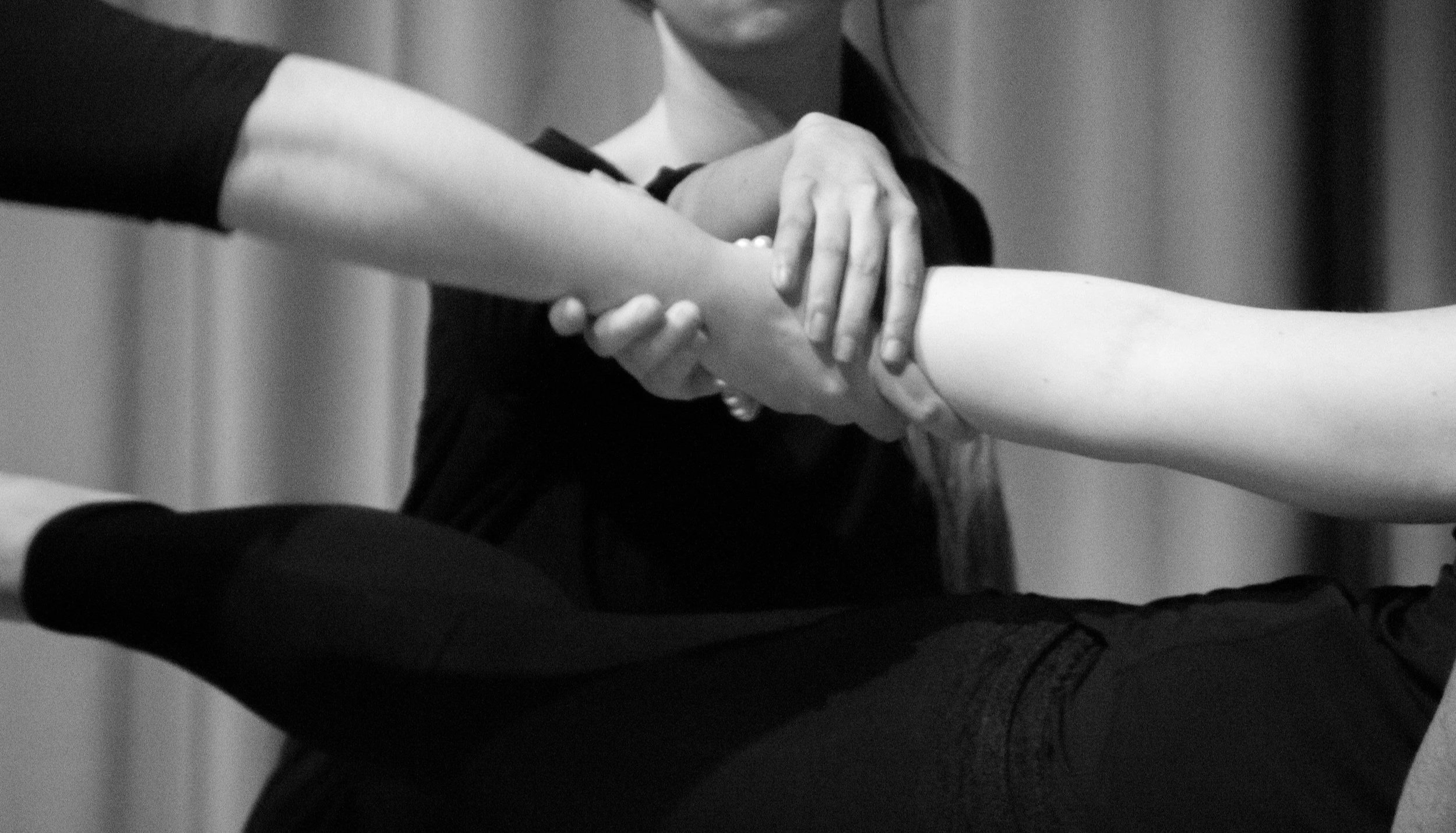
Black and White image of three people holding hands
We’ve all been there: sitting on a couch or staring at a screen, trying to talk or distract our way out of stress, anxiety, or burnout.
Have you ever noticed how sometimes even though you know why you are stressed and can talk about it with others, yet you still carry around a tight feeling in your chest, or find yourself clenching your jaw, and your stomach still feels tied in knots?
This is because emotional stress is not just a mental strain it is a physical experience. This is why despite the benefits of talk therapy we cant seem to shift out of a stress state - sometimes it even triggers a bigger stress response.
Enter Dance/Movement Therapy (DMT): an evidence-based psychotherapeutic framework that uses movement and the body to support emotional expression and help shift out of a dysregulated nervous state (Meekums, Karkou, and Nelson, 2015). By bringing back attention to our body and the sensations in it we can find out more about why we feel the way we do, and explore in creative and gentle ways about how to express emotion.
The Core Concept: "Bottom-Up" Healing
Traditional verbal therapies often rely on a "top-down" approach—using the rational, thinking parts of our brain to change our thoughts, hoping our feelings and body will follow suit. DMT takes the opposite, "bottom-up" approach, starting with the body.
IBy focusing on the body first, bottom-up therapies target more primitive brain systems like the brain stem and limbic system where trauma and chronic stress are physically stored (Kuhfuß et al., 2021). By shifting physical sensations, we can work upwards to change how the rational higher levels of the brain respond to stress (Kuhfuß et al., 2021).
In a DMT session, a therapist might guide you through structured movement interventions using
Mirroring: Moving in sync with another person to build empathy, emotional attunement and reciprocity (Manders et al., 2021).
Rhythmic Synchronisation: Using rhythm for grounding and emotional regulation through movement, cohesion, and shared meaning making (Makris et al., (preprint), 2026; Manders et al., 2021).
Improvisation: Allowing your body to move freely to express feelings that you might not have the words to describe.
Why We Need This Right Now
Let's face it: our current collective baseline is one of sensory overload, physical stagnation, and chronic digital fatigue. We live behind desks and screens, effectively severing the connection between our heads and our bodies.
Recent research underscores exactly why re-engaging the physical self is so vital for modern mental health:
1. Rebuilding "Interoception" to Fight Burnout and Depression
Depression and anxiety frequently manifest as profound bodily fatigue, psychomotor slowing, or physical pain (Valjakka, 2026). When we are overwhelmed, we tune out our body's distress signals just to get through the day.
Clinical research shows that a specific, powerful effect of DMT is the cultivation of proprioceptive and interoceptive senses—the internal radar that builds deep body awareness (Valjakka, 2026). Cultivating this inner awareness is directly correlated with a heightened sensitivity to our own emotions and an increased capacity for empathy (Valjakka, 2026). When we learn to listen to the physical body, we can catch burnout before it takes over.
2. Discharging Trapped Stress Energy
When we experience a stress response (fight, flight, or freeze), our bodies prepare a massive surge of survival energy. In modern life, we rarely get to "shake it off" or run away from the stressor (like an overflowing inbox or economic anxiety).
Somatic and body-oriented therapies are increasingly recognized because they help safely release this trapped survival energy, restore healthy autonomic nervous system regulation, and return us to a balanced, resilient zone (Neufeld, 2024; Nicholson, 2025).
3. Unleashing Play and Expression
Mental health struggles can make life feel rigid, heavy, and isolated. Clinical trials highlight that creative, movement-based therapies provide powerful healing factors because they reintroduce the experience of pleasure, playfulness, and nonverbal communication (Valjakka, 2026). Movement offers a symbolic, alternative mode of communication that can actually make it easier to talk about hard things later on (Valjakka, 2026).
The Takeaway: You don't need to be a "good dancer" to benefit from dance/movement therapy. DMT isn't about performance or choreography; it is about presence. It is an invitation to stop overthinking your life and start living it from the skin inward.
If talk therapy has left you feeling stuck, it might be time to stop searching for the perfect words. Sometimes, the most profound breakthrough begins with a single step, a roll of the shoulders, or a deep, fully embodied breath.
References
Neufeld, A. T. (2024). The Body, Mind, and Trauma: A Case for Trauma-Sensitive Somatic Mindfulness (Master's thesis). DigitalCommons@Lesley.
Nicholson, W. C. (2025). The body can balance the score: Using a somatic self-care intervention to support well-being and promote healing. PubMed Central.
Radanliev, P. (2025). Virtual dance movement therapy for reducing anxiety, and artificial intelligence for monitoring the body and mind during therapy. Body, Movement and Dance in Psychotherapy.
Valjakka, R. (2026). Study protocol for a randomised controlled trial of dance-movement therapy for adolescents with depression. PubMed Central.